


Virginia, Burley, Latakia and Oriental: A Guide to Tobacco Leaf Families
A practical guide to the four leaf families that make up nearly every pipe blend — what Virginia, burley, Latakia and Oriental each contribute, and how they taste on their own.
Walk into a decent tobacconist's and the tins tell you a story in shorthand. Full Virginia Flake. Burley and Bright. Balkan Mixture. Oriental No. 14. Those words are not decoration. They describe what is actually in the tin — and once you know the four leaf families, you can make a fair guess at how a blend will taste before you part with your money.
Almost everything on the shelf, whether it's a flake, a plug, a ribbon or a ready-rubbed aromatic, is built from some combination of Virginia, burley, Latakia and Oriental. Learn those four and you have the grammar of the pipe.
Virginia: The Sweet Backbone
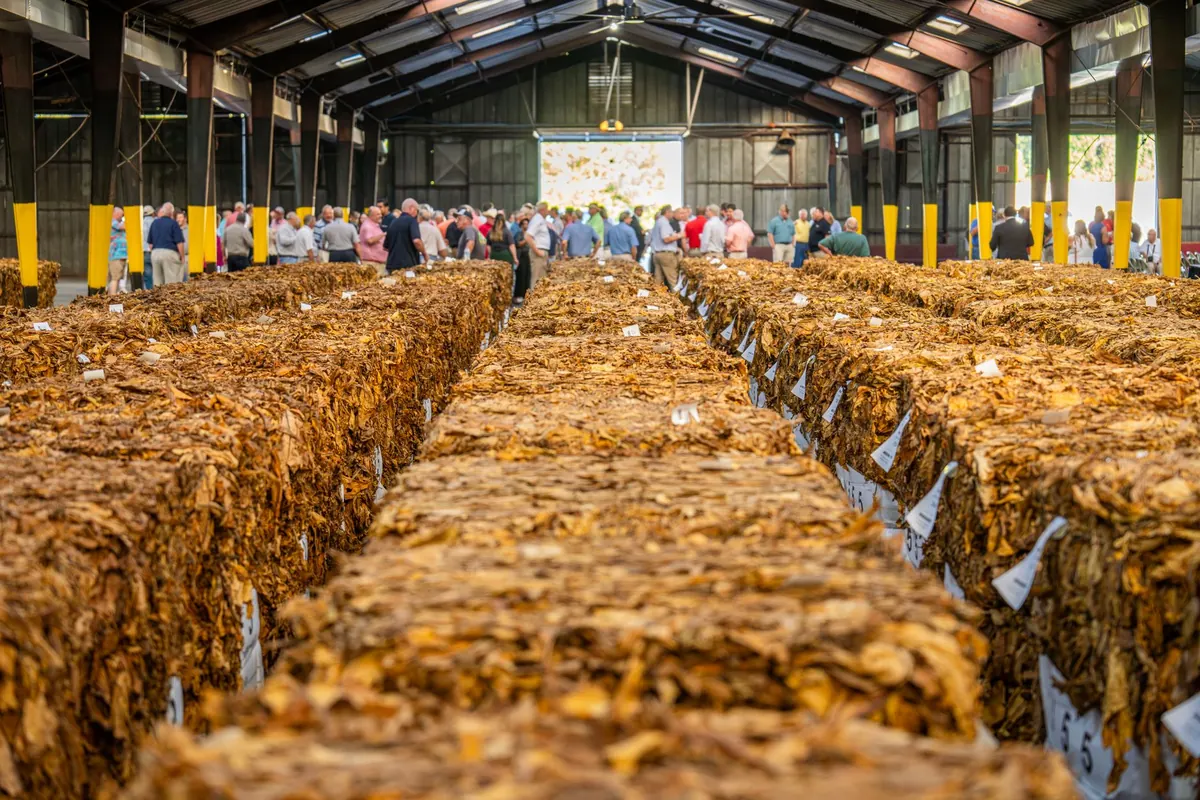
Virginia leaf is flue-cured, which means heat is applied inside a closed barn so the leaf dries without smoke ever touching it. That process leaves a lot of natural sugar behind. It's why Virginia tastes sweet, and why it browns and caramelises as it burns.
Expect fresh hay, cut grass, citrus peel and warm bread. In pressed flakes and well-aged tins you'll often find fig, plum and a dark treacle note instead. Young bright Virginia is yellow-orange and tangy; older leaf goes darker and rounder.
Smoked on its own, Virginia is clean and sweet — almost tea-like — with a depth that builds slowly if you sip it. The catch is heat. Sugar burns hot, so a straight Virginia punishes hard puffing with tongue bite and steam. Dry it for ten minutes or so, rub it out properly, pack it a touch looser than feels right, and take smaller sips than you think you need. For a first try, choose a middle-of-the-road Virginia flake rather than the strongest thing on the shelf.
Burley: The Nutty Workhorse
Burley is air-cured, usually in an open-sided barn, and emerges with almost no sugar at all. What it has instead is body, a slow steady burn, and a flavour most smokers read as nuts, cocoa, molasses, damp earth and a faint sourness at the edges.
Alone, burley is dry and honest. Some find it plain, or even a little thin in the middle; pushed hard it can turn ashy and bitter. But it does two jobs superbly. It slows down a hot Virginia, and it takes casing and topping flavours better than any other leaf. That's why so many aromatics — vanilla, cherry, rum, maple — sit on a burley base: it carries the flavour without arguing with it.
A quick experiment
If you have a favourite Virginia flake that burns too fast, mix in a pinch of plain burley ribbon and try again. The bowl will last longer and the sweetness will have something to sit against. It is one of the cheapest and most useful tricks in the hobby.
Latakia: Smoke, Leather and Bonfire
Latakia is not a plant variety. It is Oriental leaf — Cypriot these days, Syrian historically — that has been smoke-cured over smouldering aromatic woods and herbs, then aged. The tin note is unmistakable: bonfire, tar, leather, cedar and a little incense.
It is used as a condiment rather than a base, typically somewhere between ten and forty per cent of an English or Balkan mixture, though a few blends push it higher. On its own it is a serious acquired taste; many smokers find a full bowl overwhelming, closer to licking an ashtray than anything else. Yet a modest amount transforms a blend, adding campfire savour, weight in the mouth and a cool, leathery finish.
One warning: Latakia ghosts a briar for a long time. If you keep a pipe for sweet Virginias, don't run Latakia through it.
Oriental: Spice, Sourness and Sun-Dried Perfume
Oriental, sometimes called Turkish, covers a family of small-leaf, sun-cured tobaccos such as Izmir, Samsun, Basma and Yenidje, grown across Turkey, Greece, Bulgaria and the surrounding region. Low in sugar and high in aroma, they give dried fig, cedar, thyme, a buttery sourness and occasionally a floral lift like dried flowers.
Smoked alone in a small bowl, a good Izmir ribbon can seem lean and dry, almost dusty — but the perfume is remarkable. Think of a dry white wine next to a Virginia's sweet cider. That savoury, faintly sour character lingers in the moustache for hours, and it's exactly what makes Oriental leaf so valuable in a mixture.
What Each Leaf Brings to a Blend
- Virginia — sweetness, grass and citrus, dark fruit when aged; burns hot and bites if rushed.
- Burley — nuts, cocoa and earth; cool, steady, carries toppings and adds body.
- Latakia — smoke, leather, resin and campfire; a condiment with enormous reach.
- Oriental — spice, herbs, sourness and perfume; lifts a blend and keeps it interesting.
Think of it as a kitchen. Virginia is the stock, burley the potato that fills the plate, Latakia the smoked paprika, Oriental the herbs. Any one of them can stand alone, but a good mixture knows its proportions.
The Words on the Tin
- Virginia, or VaPer — Virginia-based, the latter with perique added. Sweet, tangy, sometimes peppery.
- English — generally Virginia and Oriental with Latakia. Smoky, but balanced.
- Balkan — more Oriental and Latakia, less Virginia. Sharper, more incense-like.
- American or OTC — burley-led, often lightly topped, built for an easy all-day smoke.
- Aromatic — cased and topped, usually on a burley or Virginia base; the room note matters as much as the taste.
Tasting Them for Yourself
- Buy small quantities rather than large tins. You are tasting, not stocking a cellar.
- Dedicate a pipe to each family — or use a couple of cheap corn cobs — so nothing is muddled.
- Dry the tobacco for ten to twenty minutes until it springs back rather than clumps.
- Pack lighter than usual and smoke slowly. Most leaf tastes better at a gentle smoulder.
- Note four things: draw, flavour, room note and how it finishes. A notebook beats memory.
- Revisit each one after a month. Palates move faster than most smokers expect.
Start Simple, Then Start Mixing
Work through the four families on their own before you chase complexity. A straight Virginia, a plain burley, a light English and an Oriental-forward blend will teach you more in a fortnight than a shelf of tins ever will. Once you can recognise each one in a mixture, you can read a blend description and know whether it's for you — and you can start adjusting your own mixtures with a pinch of this or that.
Keep notes, change one thing at a time, and don't write off a leaf because the first bowl was awkward. Technique accounts for a great deal of what you taste.
A final note worth stating plainly: pipe smoking is not a safe alternative to anything. All tobacco use carries serious health risks, and stopping is the only way to remove them. If you want help, your GP or a local stop-smoking service can point you in the right direction.
Photo: Mark Stebnicki / Pexels